
Baku Zoological Park
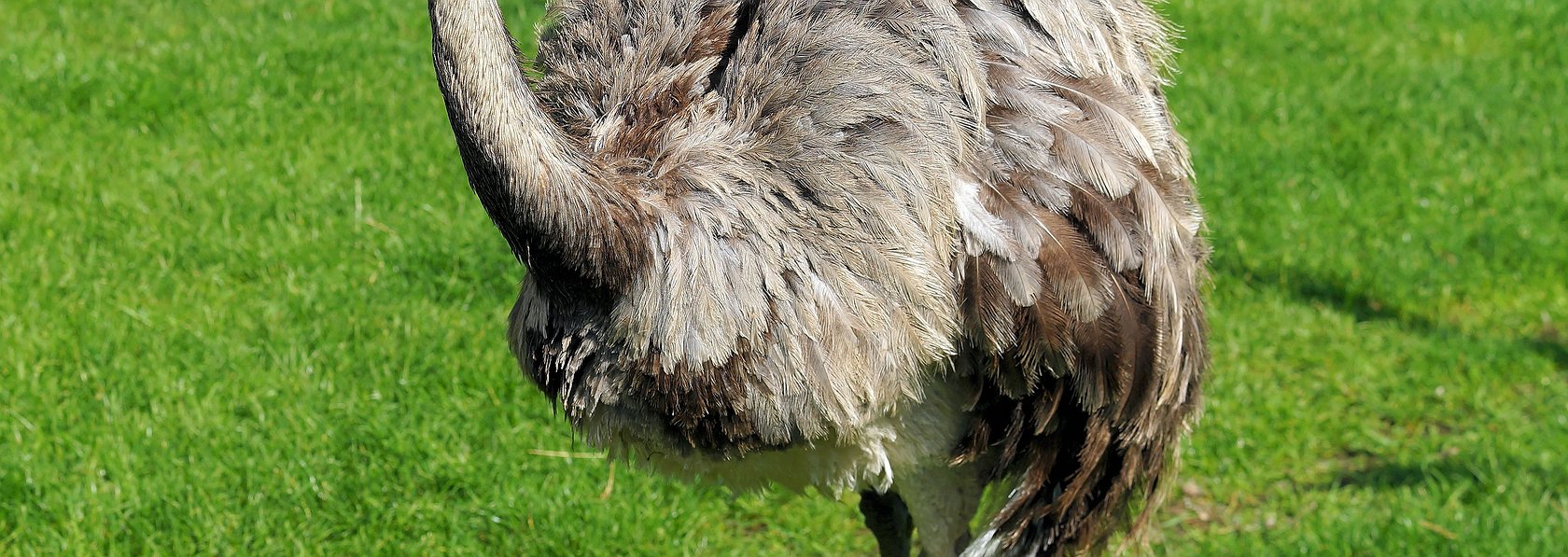
Rhea
Size and weight
1.4-1.5 m
20–30 kg
Nutrition
Omnivore
Life Span
15–20 years
Reproduction
10–60
Conservation status
Near Threatened

Found in the central and eastern regions of South America, inhabiting open grasslands and savannas of Brazil, Argentina, Paraguay, and Uruguay.
The greater rhea is a large flightless bird that has lost the ability to fly but possesses exceptional running speed. Rheas feed primarily on plant leaves, seeds, and fruits, and occasionally consume insects and small invertebrates. During the breeding season, a male mates with several females, which lay their eggs in a shared nesting site. Incubation is carried out exclusively by the male, who also provides sole care for the chicks after hatching. Young rheas remain under the protection of the male for several months. When threatened, rheas escape by running at high speed, stretching their long necks forward and hiding among vegetation.